Few bands have expanded the boundaries of popular music as profoundly as The Velvet Underground, nor have had such a lasting influence. Emerging in New York in 1965, the group stood at the intersection of art, fashion, politics, music, and counterculture.
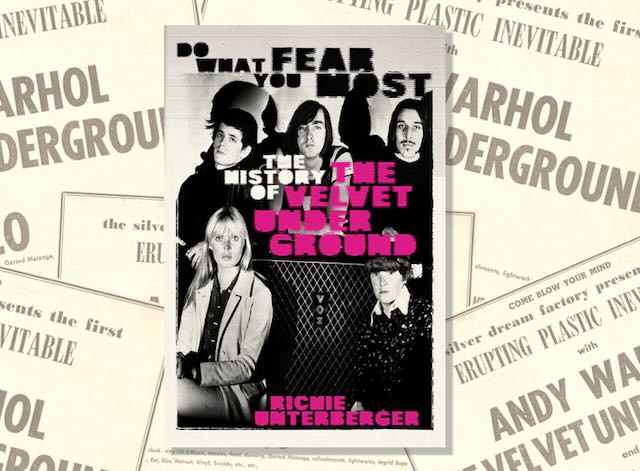
The Velvet Underground only released four studio albums before their 1970 break up, so Richie Unterberger’s Do What You Fear Most: The History of The Velvet Underground – at a whopping 816 pages – is a feat in and of itself. The book’s title is taken from the lyrics to the Velvet’s Some Kind of Love.
Do What You Fear Most, a recent addition to the Omnibus Press collection, explores the creative chemistry between the band’s three core members, Lou Reed, John Cale, and Nico.
Drummer Maureen “Mo” Tucker was the quiet force behind the band, and one of the only female drummers on the scene at that time.
Nobody had yet seen a young woman standing at a set of oddly arranged drums, relentlessly hammering out these instinctive, proto-punk foundation beats against one of the most chaotic and unpredictable rock elements music had ever seen.
When The Velvet Underground were showered with an initial burst of media attention and made their first and most famous album in 1966, they were often overlooked or dismissed as a mere cog in an Andy Warhol-overseen multimedia freak show. Despite rave reviews, they failed to dent the Top 100 or set trends at the time. Lou Reed’s eventual departure in August 1970 was barely noted in the media.
According to one reviewer, Reed’s singing sounded more like the “captain of a drunken orgy spiralling out of control” than the chief force behind a professional recording session.
Lester Bangs eventually turned in a rave review in Rolling Stone, a magazine that had previously barely acknowledged the band’s existence, citing “They have one of the broadest ranges of any group extant”, adding “Can this be the same bunch of junkie-faggot-sadomasochist-speedfreaks who roared their anger and their pain in storms of screaming feedback and words spat out like strings of epithets? Yes. Yes, it can.”

Do What You Fear Most traces the story of how an improbable collective of outsiders came to shape the musical spirit of their era. Richie Unterberger follows the band from their varied beginnings to their rise as Andy Warhol’s Factory house band in New York City.
While the book is organized in chronological order, due to its heft, I found myself dipping in and out of various chapters. Each one goes into the finer details of recording sessions, outtakes, song versions, etc. making it ideal for readers looking for a richly documented account focused on the legend, myth, and music surrounding the band (there’s no shortage of any of these!).
There’s just two small photo collections in the book — I’d loved to have seen a lot more given the book’s size. I did however enjoy learning about Welsh maestro John Cale, impressed that he began composing music while still in grammar school. In the mid 1950’s, BBC Wales recorded him performing one of his own pieces, the two-and-a-half minute “Toccata in the style of Khachaturian”.
By the end of that same decade, he had already embraced the multidisciplinary eclecticism that would become a trademark, and had moved well beyond contemporary composer John Cage’s classical repertoire.
Since only two members (John Cale, Maureen “Mo” Tucker) are still alive, many of the interviews are historical, yet the author manages to include newer material sourced from the Lou Reed and Andy Warhol archives. Also included is Reed’s first music business boss, Terry Phillips, and filmmaker Paul Morrissey who co-managed the band together with Andy Warhol, less a key figure, more a financial backer.
Reading different sections, you can’t help but flinch at the tension and dynamics between the band and its members, from their 1966 formation to John Cale’s removal from the band to a short-lived 1993 reunion tour. During the latter, we learn of Reed’s insistence on producing all future band recordings without consulting other band members, or, it appears, considering their feelings.
Though mainstream success largely eluded them during their four-album career, their influence endured across generations. The Velvets counted celebrated contemporaries such as Leonard Cohen, David Bowie, and Jimi Hendrix among their admirers, while later inspiring artists including Roxy Music, Pretenders, and Sonic Youth.
Do What You Fear Most: The History of The Velvet Underground is published by Omnibus Press; UK £30 (available in Canada via Indigo Books; CAD $69.95).
You Might Also Like
 Sonic Life Vividly Captures 1970’s New York Art and Punk Scene
 We Could Be…An Entertaining Look at David Bowie’s Brushes with Fame
 Teenage Kicks: My Life as an Undertone is an Entertaining Throwback to the Band’s Formative Years
 Journey to the Centre of the Cramps Delves into Band’s Rock ’n’ Roll Legacy
 #Punk40 Celebrates 40 Years of London’s Music and Subversive Culture Scene