Inspired by Iceland, in town over the past several days to showcase several culinary and cultural events in Vancouver, hosted a three-course media tasting Hawksworth Restaurant, where Chef Haflidi Halldórsson was front and centre to demonstrate the preparation and history behind the ingredients we were served.
As CEO of Icelandic Lamb, Chef Halldórsson grew up on a sheep and dairy farm in Iceland’s Westfjords peninsula and gained hands-on experience working the rough seas of the North Atlantic as a fisherman. He brings first-hand expertise in the sourcing, quality, and traceability of Icelandic produce, alongside his role as a board member of both the Icelandic and Nordic Chefs Associations.

[Chef Halldórsson]
Our group learned quite a bit about the culture and cuisine from The Land of a Fire and Ice, and were encouraged to ask questions along the way.

At one point during the cooking demonstration, the conversation turned to sheep farming.
When the Vikings set foot in Iceland over 1,100 years ago, their unique breed of sheep jumped past them into rich green pastures. Ever since, Icelandic sheep have grazed freely in the highlands, evolving to become a pure, strong and robust species with flavor and tenderness beyond compare.
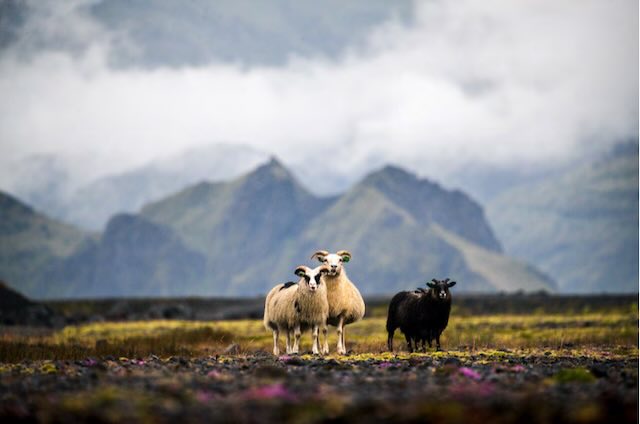
– All Icelandic livestock is protected and has been so for over 100 years.
– Once livestock leaves the country for export or exhibition, it is permanently prohibited from returning, regardless of how healthy it may appear. Agricultural regulations also ban the importation of live animals, helping to minimize the risk of introducing diseases.
– Iceland breeds short-tailed sheep, compared to their European and North American relatives.
– The sheep are bred at small family farms where animal welfare is key.
– Icelandic sheep are strong and sturdy, well adapted to the harsh Icelandic environment.
– Due to the cool climate, unpolluted air, and clean mountain water, pesticides and herbicides are not needed.
– Iceland has a record-low use of antibiotics in agriculture.
– Iceland is in the top three of European animal production yields.
– Icelandic sheep are kept indoors in wooden pens and fed during winter. By June, they roam freely to graze on healthy, rugged highland grass.
– Once the sheep have had a chance to wander outdoors, they are rounded up by the farming community (aka réttir), sorted, and returned to their respective farms.

[Grilled lamb, fillet lamb sauce, glazed beets, fermented plum]
Admittedly, lamb has never been my first choice, but this dish completely changed my mind. The melt-in-your-mouth tenderness and sublime flavours showcased Chef Halldórsson’s exceptional culinary artistry. As an added bonus, lamb is naturally rich in Omega-3 and iron.
I was hosted by Hawksworth Restaurant and Inspired by Iceland. Opinions, as always, remain my own.