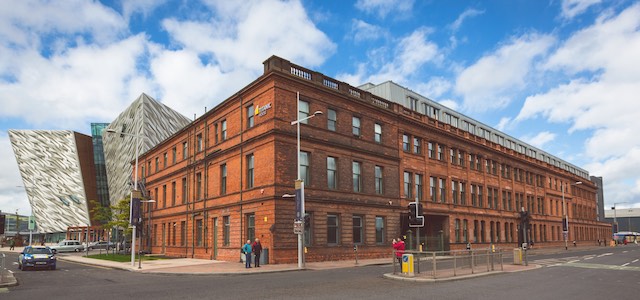
You can’t get any closer to Titanic history than with a stay at the Titanic Hotel Belfast, housed in a portion of the former headquarters of Titanic builders Harland & Wolff.
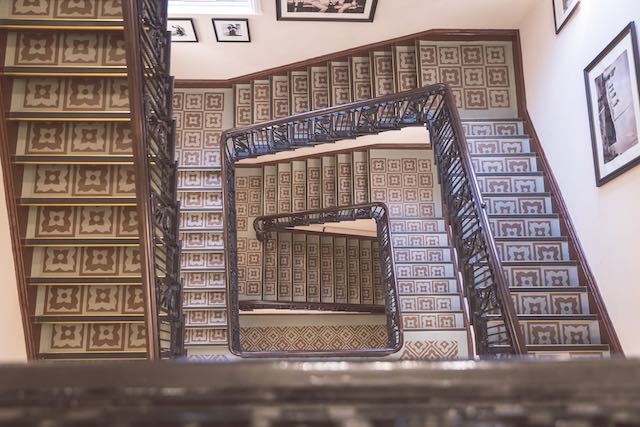
Half-hotel, half-museum, the building is home to an original collection of over 500 artworks, artefacts, and photographs transporting guests to the Golden Age of ocean travel.


The building is a must-visit destination for ship lovers of all ages. As Harland & Wolff rose to shipbuilding fame, the Drawing Offices were created as meeting places that helped to charter the course of the industry. These two gorgeous offices stand as testament to one of the world’s most successful businesses: Not only was the Titanic built here, but over 1,700 other vessels as well, some considered record-breakers.

The Drawing Offices were built in the late 1880’s as the company was emerging as one of the world’s leading shipbuilders. Here decisions were made which changed the course of shipbuilding as visionary designers created the largest, most innovative and luxurious ships of the time.
While The Drawing Offices and half a dozen key heritage rooms within the hotel are open to public tours, hotel guests can arrange a free tour with access to Lord Pirrie’s office, ‘The Corridor of Power’, the Presentation Room, and Thomas Andrews’ office.

As the Titanic Hotel Belfast and Titanic Belfast are located opposite one another, the hotel offers a package that includes two tickets to the Titanic Experience plus a “Titanic-sized” breakfast in the morning.


Rooms
As would be expected, rooms here are richly-detailed and nautically themed with streamlined Art Deco furniture, riveted panels, and maritime artwork.

Floor-to-ceiling windows, king-sized beds and Egyptian cotton sheets with natural-fibre pillows provide a good sleep ahead of a day of touring. I called this lovely property home for one night, before my own Titanic journey home to Canada.

[Lots of outlets around the room!]
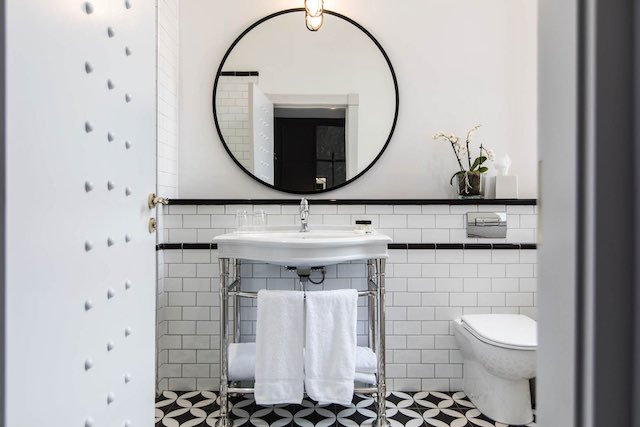
Bathrooms contain striking black and white geometric floor tiles, white sinks, rain showers, and UK luxury brand ESPA toiletries to cleanse and to refresh with.

My eyes are drawn to the Art Deco-inspired rounded curtain rods that grace those floor-to-ceiling windows. An open closet space by the door houses an iron, ironing board, robes and slippers, tea and coffee service, and an electronic safe.

This room also has a sweet view of the Titanic Belfast Experience across the way!

Throughout are White Star Line posters, ship illustrations, Harland & Wolff advertisements, and a pair of suspended ship lanterns at each bedside. Bedside tables mimic old drawing room desks, with a silver-accented working desk close to the windows.

Dining
Onsite are two restaurants: Wolf Grill Restaurantand Drawing Office Two. The Drawing Office Two is housed in a three-story high, barrel-vaulted ceiling room styled in the only surviving example of shipyard architecture left in the world.

[Wolf Grill Restaurant]
The extensive cocktail (and mocktail) menu features the Punch Romaine, one of the last cocktails to be served on the Titanic, made with Bacardi, Pinot Grigio, orange and lime juices, sugar and egg white topped with Prosecco.
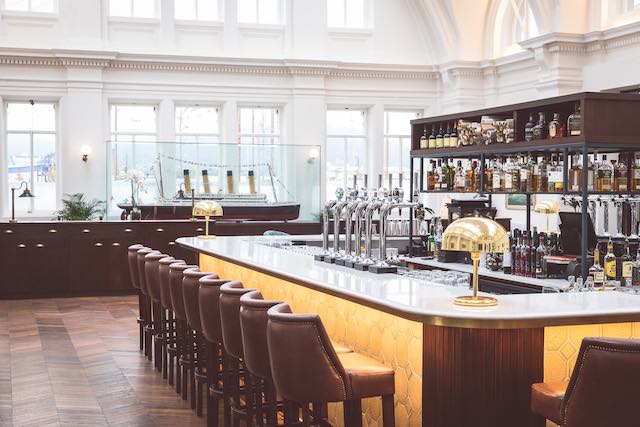
Many items from the original structure were recovered during renovation, right down some of the tiles, repurposed and reset into the bar area. You’re literally touching a piece of history when running a finger along those tiles. Throughout the hotel and dining areas are information panels. Signage is printed on linen, a reminder of Belfast as a world leader in linen manufacturing, even earning the nickname “Linenopolis”.

[Executive Chef Alastair Fullerton overseas Drawing Office Two, Wolff Restaurant and meetings and events food services]
Here I tucked into a midday meal of a lovely salad followed by Katsu curry, one of the restaurant’s most popular dishes, surrounded by interior decor created by the very designers of the RMS Titanic, with a curated menu provided by Executive Chef Alastair Fullerton. Vegan, vegetarian, gluten-free, plus kids menus are all available.

[Harland Bar]
The Drawing Office Two also offers afternoon tea. The Harland Bar, filled with beautiful Art Deco and Art Nouveau travel posters and a brilliant interior design, is a welcoming space with views of the Titanic Belfast and Harland and Wolff’s slipways.

The Titanic Belfast, about to ring in 13 years next month, offers an in-depth look at Belfast through its various industries — linen, rope-making, whiskey, and of course ship building. Titanic Belfast showcases the city through numerous interactive and static displays (plus a short, slow amusement-park style ride).

Edward Harland and Gustav Wolff began a long and prosperous partnership with Thomas Ismay’s White Star Line in 1870, and up until WW1, built all but one of White Star’s ships.

Another facet of the exhibit outlines the dismal working conditions of dock and carter workers.

As the fastest cargo discharging port in the world, Belfast dock workers were often subject to dangerous, physically-demanding work, often for low pay and employed for 68 hours a week.
By 1907, there were 6,000 dockers and carters in the company’s employ. Falling into the river or being crushed were common fatalities. Though the workers went on strike, causing severe economic disruption to the city, working conditions were not improved.

Many lessons were learned from the sinking giant, and several exhibits show how maritime safety regulations were later put in place following the disaster. Going a step further, exhibits also include the Titanic search, the technology used, and the ship’s eventual discovery in 1985 via a French and American-led search crew.
Several objects rescued from the Titanic are on display, together with survivor stories, recalling those final frightful hours on board.

The tour continues outside with the SS Nomadic, the RMS Titanic’s tender ship and last remaining White Star Line vessel in the world (one ticket is valid for both attractions).
In the Area
The Titanic Quarter is a newer addition to the city that’s rapidly being developed into a destination hub. Take a stroll along the riverside Titanic Trail to discover historic points of interest, including the 1914 navy cruiser HMS Caroline.

The Pumphouse and Thompson Dry Dock, dating to the early 1900’s, were built to serve the Olympic and Titanic, both massive White Star transatlantic liners. Today it’s home to Titanic Distillers. The interior and pump equipment are fully preserved and restored! Enjoy a glass of whiskey and learn about whiskey distilling on an optional tour.
Additional major city draws include the Ulster Museum, Crumlin Road Goal, Belfast City Hall, St. George’s Market, Belfast Castle Estate & Cove Hill and CS Lewis Square. Outside Belfast, explore Giant’s Causeway or a Game of Thrones tour.
George Best Belfast City Airport is an easy eight-minute drive away, with excellent connections at London Heathrow (flight time from Belfast to London is about an hour and a half).

The Titanic Hotel Belfast is located at Queen’s Road, Titanic Quarter, Belfast.
I was a guest of the Titanic Hotel Belfast for the purpose of creating this feature. Non-watermarked images courtesy of Titanic Hotel Belfast.
You Might Also Like
 Our Belfast, Northern Ireland City Guide
 Portland Sleeps: Woodlark Hotel Offers Historic Charm in Heart of PDX
 The Historic Halliburton House Inn: Charming, Intimate Boutique Lodging in Downtown Halifax
 The Spa at The Merchant Hotel Belfast Offers VOYA Jet Lag Revitalizing Massage
 Historic Fairmont Le Château Frontenac Receives Major Upgrade in Time to Celebrate its 125th Anniversary